
Questions?
(800) 351-9633
(800) 351-9633

Running bamboo is one of the most beautiful and most misunderstood plants in landscaping. Here is what you need to know before you plant -- or after it has already gotten out of hand.
Running bamboo is responsible for some of the most stunning bamboo landscapes in the world -- towering privacy screens, lush garden groves, and dramatic focal plantings. It is also responsible for some of the most frustrating and expensive landscaping problems homeowners encounter, when its fast-spreading underground network escapes its intended planting area and invades lawns, gardens, and neighboring properties.
Understanding what running bamboo is, how it grows, and how to manage it is essential for anyone considering planting it -- or anyone already dealing with the consequences of planting it without containment.
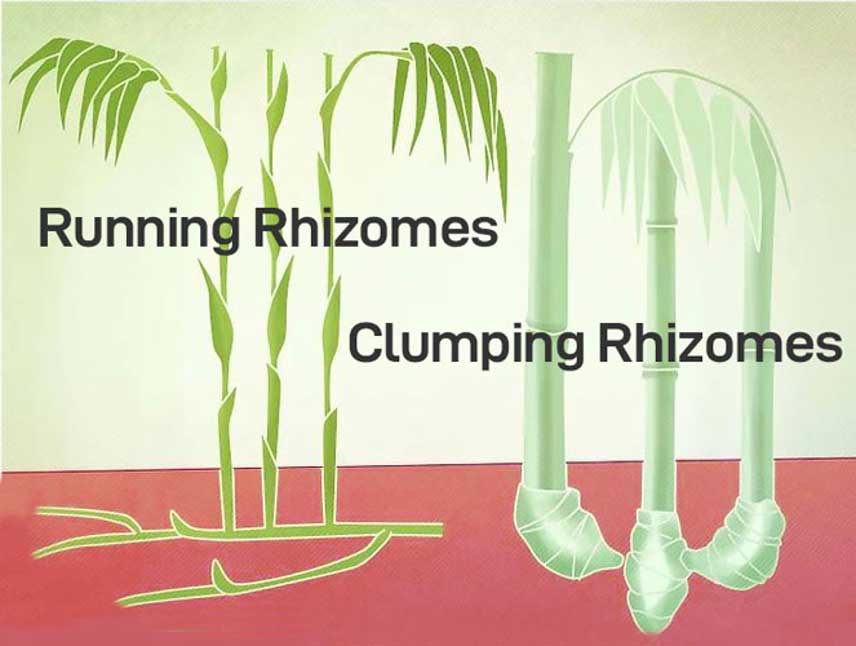
Running bamboo is any bamboo species that spreads via leptomorph rhizomes -- long, thin horizontal underground stems that grow outward from the parent plant in all directions and send up new culms (canes) at intervals. "Running" describes the way these rhizomes run through the soil, extending the plant's territory far beyond the original planting.
Most of the bamboo species commonly sold in nurseries across the United States are running bamboos. They are easy to propagate, widely available, and fast-growing -- which makes them attractive to consumers and nurseries alike. This availability, combined with widespread lack of knowledge about their spreading behavior, is why running bamboo problems are so common in residential landscapes.
Running bamboo spreads entirely through its rhizome system. This is the critical fact that most homeowners do not understand until it is too late:
Cutting the above-ground canes does not stop running bamboo from spreading.
The rhizomes -- the horizontal underground stems -- are completely independent of the visible canes. They are growing through the soil at all times during the active growing season, extending outward from the parent plant and actively seeking moisture and space. The above-ground canes are just the visible expression of an underground system that is constantly expanding.
The process works like this:
Over time, a single bamboo planting becomes a colony. The rhizome network extends far beyond the visible above-ground canes, exploring the surrounding soil in all directions.
| Species | Common Name | Height | Spread Rate | Notes |
|---|---|---|---|---|
| Phyllostachys aurea | Golden / Fishpole Bamboo | 10 to 30 ft | Very aggressive | Most common in US; highly invasive |
| Phyllostachys nigra | Black Bamboo | 20 to 30 ft | Aggressive | Prized for ornamental dark canes |
| Phyllostachys bambusoides | Japanese Timber Bamboo | 40 to 70 ft | Aggressive | Large timber species; requires deep barrier |
| Phyllostachys vivax | Chinese Timber Bamboo | 20 to 50 ft | Very aggressive | Very large footprint when mature |
| Pseudosasa japonica | Arrow Bamboo | 12 to 16 ft | Moderate | More restrained than Phyllostachys but still a runner |
| Semiarundinaria fastuosa | Temple Bamboo | 20 to 30 ft | Moderate | Elegant; slower than many runners |
Despite its spreading nature, running bamboo is genuinely excellent for certain landscape applications -- particularly when it is properly contained:
None of these benefits require the bamboo to be uncontained. All of them can be achieved with a properly installed rhizome barrier that keeps the bamboo within its intended planting area.
The downside of running bamboo without containment is well-documented:
Running bamboo can absolutely be grown in a residential setting -- it just requires a physical containment system. The options are:
A vertical HDPE barrier installed in the soil around the bamboo planting area intercepts spreading rhizomes and redirects them. The bamboo grows vigorously within the contained area but cannot expand beyond it. The barrier should be installed to a depth of at least 24 to 36 inches, with 2 inches extending above the soil surface for rhizome monitoring.
Growing running bamboo in large containers (wine barrels, planters) prevents spreading -- but the container must be solid with no drainage holes in contact with soil, or the rhizomes will find a way out. This method limits the size and longevity of the planting.
Digging around the bamboo perimeter annually and severing rhizomes. Effective but labor-intensive and requires consistent annual commitment -- one missed year allows significant spread.
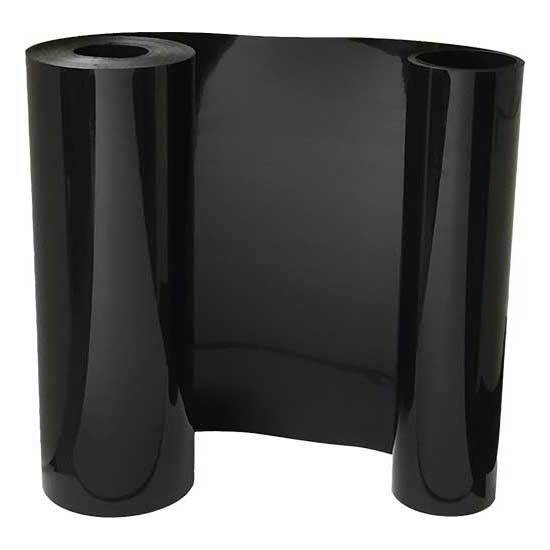
The recommended starting point for most running bamboo species. At 1/16 inch (1.5mm), it provides heavy-duty containment for aggressively spreading varieties. 100-year in-ground lifespan, UV-stabilized, made in the USA.
Depths: 18", 24", 30", 36", 48", 60" | Free shipping
Shop 60 Mil →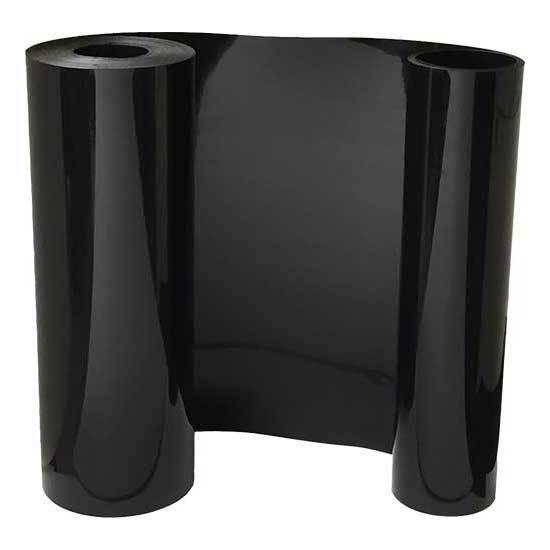
When your running bamboo is a large timber species (Phyllostachys bambusoides, Phyllostachys vivax) or is planted near infrastructure, the 80 mil provides ultra heavy-duty containment with depths available up to 96 inches.
Depths: 18", 24", 30", 36", 48", 96" | Free shipping
Shop 80 Mil →Tell us about your running bamboo species and site conditions. The Bamboo Barrier Selector will recommend the right thickness and depth for your specific situation.
Use the Bamboo Barrier Selector →Rhizome Barrier Supply carries USA-manufactured HDPE barriers in 60, 80, and 100 mil thicknesses. Free shipping nationwide. The most effective containment system available for running bamboo.
Shop Bamboo Barriers →Running bamboo refers to bamboo species that spread via long horizontal underground stems called leptomorph rhizomes. These rhizomes travel outward from the parent plant in all directions, sending up new shoots at intervals. Running bamboo can spread 5 feet or more per year and is considered invasive in most residential settings without proper containment.
Running bamboo produces long, thin leptomorph rhizomes that travel far from the parent plant, spreading aggressively across wide areas. Clumping bamboo produces short, curved pachymorph rhizomes that turn upward quickly to form new culms near the parent plant, expanding slowly as a tight clump. Running bamboo requires active containment; clumping bamboo is much more manageable but still benefits from a barrier near sensitive areas.
Running bamboo typically spreads 3 to 5 feet per year, though in warm climates with ample moisture and loose soil it can spread even faster. The common description is: first year it sleeps, second year it creeps, third year it leaps. By year three to five, an uncontained planting can cover an area 15 to 20 feet in diameter.
Yes. Running bamboo can be planted and contained within a defined area using a physical HDPE rhizome barrier. The barrier is installed vertically in the soil around the planting area to a depth of 24 to 36 inches, with 2 inches extending above the surface. The bamboo rhizomes hit the barrier and grow along it rather than passing through. With a proper barrier, running bamboo can be grown safely in residential settings.
Many running bamboo species are surprisingly cold-hardy. Species like Phyllostachys can survive well below freezing temperatures, though they may lose foliage in severe winters. The rhizomes remain alive underground through winter and resume growing in spring. Cold weather does not stop bamboo from spreading -- the rhizome network simply continues its outward expansion when temperatures warm.
{"one"=>"Select 2 or 3 items to compare", "other"=>"{{ count }} of 3 items selected"}