
Questions?
(800) 351-9633
(800) 351-9633

Step-by-step instructions for correctly installing an HDPE rhizome barrier -- the one-time solution that keeps bamboo contained for life.
Planting a bamboo barrier correctly is the single most important factor in whether your bamboo stays contained long-term or eventually escapes and causes the costly problems running bamboo is notorious for. An improperly installed barrier -- too shallow, with an unsealed seam, or without above-grade exposure -- will fail, sometimes within the first growing season.
This guide covers every aspect of bamboo barrier installation correctly: how to choose the right barrier, how to size it for your site, and the precise installation technique that ensures the barrier performs as intended for its 100-year in-ground service life.
Running bamboo spreads through an underground network of horizontal stems called rhizomes. These rhizomes travel through the top 12 inches of soil in all directions from the parent plant, extending 3 to 5 feet per year and sending up new shoots wherever they travel. Without a physical barrier, there is nothing to stop this expansion.
A properly installed HDPE rhizome barrier creates a continuous vertical wall in the soil that rhizomes cannot penetrate. The bamboo grows vigorously within the contained area, filling in as desired -- but the rhizomes hit the smooth HDPE surface and grow along it rather than through it. With 2 inches of barrier material extending above the soil surface, any rhizome that attempts to grow over the top becomes visible for easy removal.
| Thickness | Application | Best For |
|---|---|---|
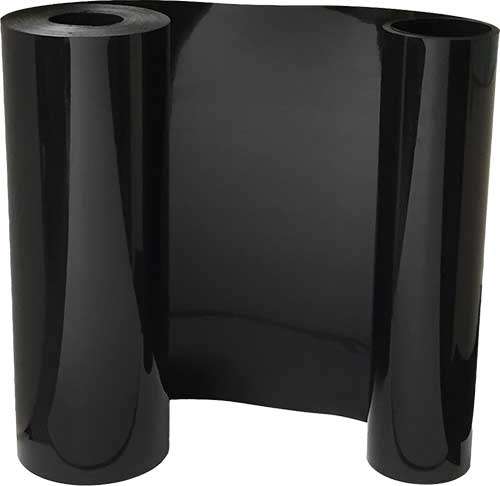
| 60 Mil (1/16", 1.5mm) | Heavy-duty | Most residential running bamboo; aggressively spreading species; standard choice for most applications |
| 80 Mil (5/64", 2mm) | Ultra heavy-duty | Very aggressive bamboo; large timber species; near foundations, pools, or utilities; where containment failure has high consequences |
| 100 Mil (1/10", 2.5mm) | Extreme-duty | Most aggressive species; well-established timber bamboo; commercial applications; maximum protection required |
Most bamboo rhizomes grow within the top 12 inches of soil. The barrier should be installed substantially deeper to account for downward-angling rhizomes that attempt to pass under the barrier:
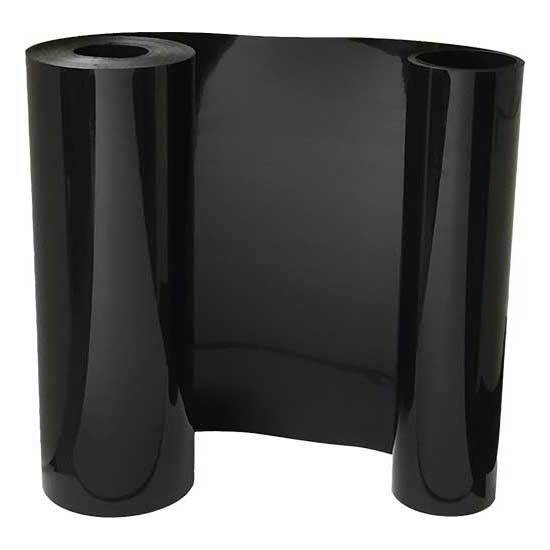
The standard choice for most bamboo barrier installations. Chrome-rolled deflection surface, built-in UV stabilization, 100-year in-ground lifespan. Available in depths from 18" to 60" (roll length varies by depth). Joins with HDPE seam tape. Free shipping. Made in the USA.
Shop 60 Mil →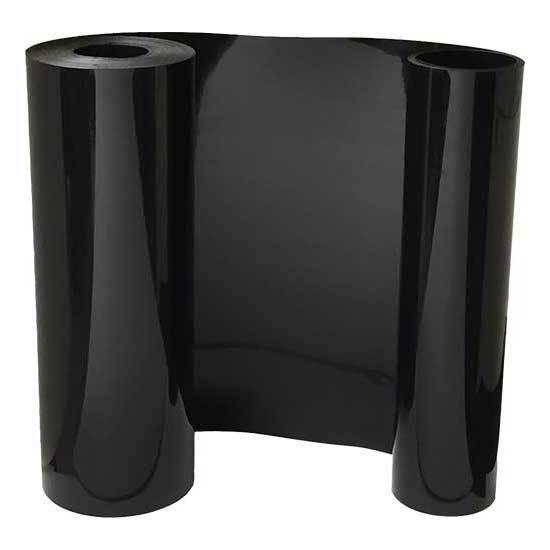
Ultra heavy-duty for large timber bamboo or high-stakes installations. Available in depths from 10" to 96" for deep-rooting timber species; roll length varies by depth. Free shipping. Made in the USA.
Shop 80 Mil →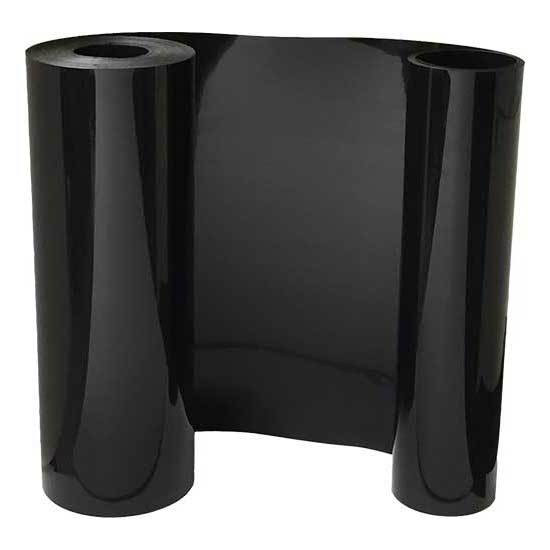
Extreme-duty containment at 1/10 inch (2.5mm) thickness. Available in a single 36" depth on an 80-foot roll. For the most demanding bamboo containment applications. Free shipping. Made in the USA.
Shop 100 Mil →Mark the perimeter of the containment area. For new bamboo plantings, plan the boundary 1 to 2 feet outside where you want the bamboo to grow, giving room for the planting to fill in. For existing bamboo, mark 1 to 2 feet outside the current outer edge of the canes.
Ensure the trench will form a complete, unbroken circle. There should be no gaps in the barrier perimeter -- rhizomes will find any gap.
Excavate a trench to a depth equal to your barrier height minus 2 inches. For a 30-inch barrier, dig a 28-inch trench. The 2-inch gap is the above-grade portion that will be visible after installation.
Keep the trench width narrow -- just wide enough to place the barrier and backfill firmly. Avoid tight corners; make all corners gradual curves to prevent stress on the HDPE material.
Before installing the barrier, dig into the bamboo planting area and find the deepest rhizomes you can locate. The barrier must be at least 12 inches deeper than the deepest rhizome you find. If your chosen barrier is not deep enough, order a deeper size before proceeding.
Measure the full perimeter of your trench and add 4 feet for the overlap at the seam. Cut the barrier to this length with a utility knife. HDPE cuts cleanly with a sharp blade -- score the material and bend to snap, or cut fully through.
Set the barrier vertically in the trench. The top edge should stand exactly 2 inches above the finished soil grade. Check this carefully -- the above-grade portion is critical for rhizome monitoring. Use a level or string line if needed to verify consistent height around the perimeter.
Where the two ends of the barrier meet, overlap them by a minimum of 4 feet. Apply multiple vertical strips of HDPE seam tape within the overlap area, pressing firmly to bond the two layers together. The seam is the most vulnerable point of any barrier installation -- a properly overlapped and taped seam is as strong as the rest of the barrier.
Fill the trench with the excavated subsoil first. Tamp firmly in 6-inch layers to eliminate air pockets -- air pockets leave voids that rhizomes can exploit. Complete the fill with the original topsoil, packing tightly. Remove any sharp objects (glass, metal, roots, stones) from the backfill before replacing it -- these can puncture or damage the barrier.
After installation, bamboo barrier maintenance is minimal:
Retrofitting a barrier around bamboo that is already in the ground follows the same steps as new installation, with one additional requirement:
Before installing the barrier, excavate and remove any rhizomes that have already spread beyond the intended containment boundary. If escaped rhizomes are not removed, they will continue growing outside the barrier regardless of how well the barrier is installed. Use a spade to cut and remove all rhizome material outside the planned barrier line to a depth of 12 to 18 inches.
After excavating escaped rhizomes and installing the barrier, monitor for re-sprouting outside the barrier for one to two seasons. Remove any new shoots outside the barrier immediately.
Not sure which barrier thickness or depth is right for your bamboo species and site? Answer a few questions and get a specific recommendation from Rhizome Barrier Supply.
Use the Bamboo Barrier Selector →USA-manufactured HDPE bamboo barriers in 60, 80, and 100 mil thicknesses. Depths from 18" to 96". Free shipping on all orders. 100-year in-ground lifespan. The permanent solution for bamboo containment.
Shop Bamboo Barriers →To plant a bamboo barrier: dig a trench 2 inches shallower than your barrier height; check existing rhizome depth and confirm the barrier is deep enough; place the HDPE barrier vertically with 2 inches above finished grade; overlap the two ends by 4 feet and seal with HDPE seam tape; backfill with subsoil first, then topsoil, tamping firmly to eliminate air pockets.
For most residential running bamboo, 60 mil HDPE is the recommended standard. Use 80 mil for very aggressive species, large timber bamboo, or near foundations and utilities. The 100 mil is for extreme-duty commercial applications. When uncertain, go to the next thickness up.
The two ends of the bamboo barrier should overlap by a minimum of 4 feet, with HDPE seam tape applied in multiple vertical strips within the overlap. A shorter overlap increases the risk of rhizomes finding a path between the two layers at the seam.
Measure the perimeter of the containment area and add 4 feet for the seam overlap. Roll length depends on the depth you select -- most depths come on 100-foot rolls, with the deepest sizes on shorter rolls. For a circular area with a 10-foot diameter, you need approximately 35 feet of barrier plus 4 feet for the seam -- a single roll covers the job.
Yes. The process is the same as new installation. The additional step required for existing bamboo is to excavate and remove any rhizomes that have already spread beyond the planned barrier boundary before installing. Rhizomes outside the barrier line must be cleared -- if they remain, they will continue growing outside the barrier after it is installed.
{"one"=>"Select 2 or 3 items to compare", "other"=>"{{ count }} of 3 items selected"}