
Questions?
(800) 351-9633
(800) 351-9633

Understanding bamboo's shooting season is the key to controlling where bamboo grows — and preventing it from taking over your yard.
Table of Contents
Every spring, bamboo owners experience the same phenomenon: new shoots push up through the soil at remarkable speed, sometimes overnight, sometimes in places they never expected. These bamboo sprouts — technically called culm shoots or simply "shoots" — are among the most dramatic growth events in the plant world. Understanding what drives them, when to expect them, and how to manage them is essential for any property owner with bamboo.
Bamboo sprouts (also called bamboo shoots or new culms) are the initial above-ground growth of a new bamboo cane. They emerge from buds on the underground rhizome network, pushing through the soil as tightly wrapped, pointed structures that unfurl rapidly into full-sized canes.
A new bamboo shoot contains all the cells it will ever have at the moment it breaks through the soil. Unlike trees, bamboo does not add new cells to an existing cane over time — all the cells are present from the start, and the shoot's extraordinary growth rate is the result of those pre-formed cells expanding and elongating simultaneously. This is why bamboo can grow so fast without appearing to change in diameter as it grows taller.
Young bamboo sprouts emerging from the soil. These shoots contain all the cells they will ever have — they grow by cell expansion, not cell division, which is why growth is so rapid.
The timing of bamboo's shooting season depends on the species and climate zone:
One important distinction: bamboo rhizomes continue growing and spreading underground throughout the growing season — not just during the shooting period. New sprouts only appear during the defined shooting window, but the rhizome network extending the plant's territory is active from spring through fall.
Bamboo holds the world record for fastest plant growth. Certain tropical species can grow up to 35 to 36 inches (nearly 3 feet) in a single day under ideal conditions. Most residential running bamboo species in the US grow 6 to 12 inches per day during peak shooting season — still enough to see visible change from morning to evening.
A typical timeline for a new bamboo shoot:
New bamboo sprouts are conical, pointed structures wrapped in overlapping papery sheaths (called culm sheaths or shoot sheaths). They push straight up from the soil, often with a slight curve at the tip. Depending on the species, they may be:
The sheaths drop off as the cane matures, revealing the smooth, polished culm surface beneath. This is why you often see papery sheaths scattered around an established bamboo grove in spring and early summer.
When bamboo sprouts appear far from the main planting — in the lawn, through a fence, in a garden bed — it is because the rhizome network has extended underground to that location. The visible shoot is simply the surface expression of rhizome activity that has been happening underground for months or years.
This is one of bamboo's most surprising behaviors for homeowners who planted what appeared to be a contained grove. Rhizomes can travel 5 to 10 feet or more underground before sending up a sprout, meaning a new shoot appearing 8 feet from the main clump indicates rhizomes traveled that full distance without any visible warning.
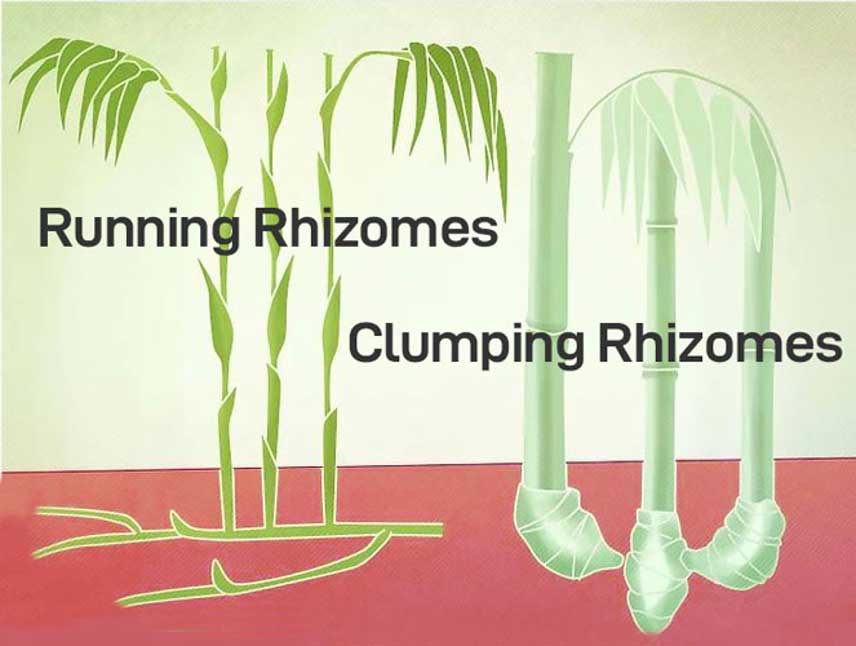
Running bamboo rhizomes extend in all directions from the parent plant, producing new sprouts wherever they travel. This is why bamboo can appear to "jump" to unexpected locations.
New bamboo sprouts are soft and easily cut in their early stages — a sharp spade or pruning shears can sever them cleanly at ground level. This is the least labor-intensive window for removing unwanted growth. Once a shoot has hardened into a mature cane (after a few months), removing it requires significantly more effort.
Important: cutting a sprout does not kill the rhizome that produced it. The rhizome will attempt to produce another sprout. Consistent removal over multiple seasons is required to deplete the rhizome's energy if your goal is elimination.
For homeowners who want to manage bamboo density within a contained area, the shooting season is the ideal maintenance window. Simply cut unwanted sprouts to the ground during the 4 to 8 week window when they emerge. Sprouts that are not cut will mature into permanent canes that require more effort to remove later.
If bamboo is sprouting in unwanted locations, the underlying problem is uncontained rhizomes — not the sprouts themselves. Cutting visible sprouts outside the intended planting area is necessary, but it does not address the rhizome network causing them. Without a physical barrier, new rhizomes will continue extending and producing sprouts in new locations indefinitely.
A physical HDPE rhizome barrier intercepts spreading rhizomes before they can extend to new areas — which means new sprouts only appear within the contained planting zone, never outside it. The 2 inches of barrier extending above the soil surface catches any rhizome attempting to grow over the top, making them visible for easy removal.
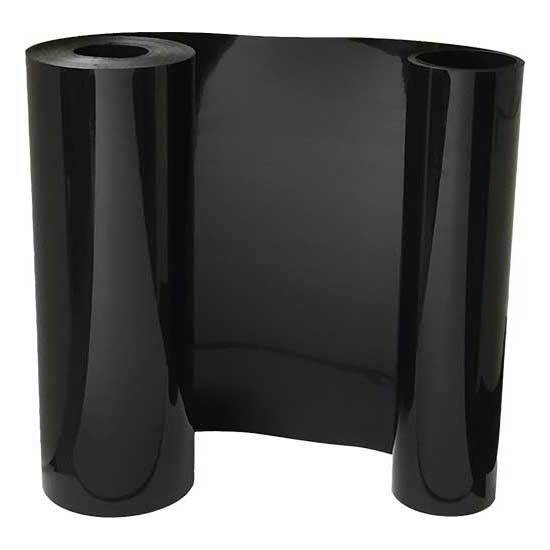
Prevent bamboo sprouts from appearing outside the intended planting area. The 60 mil HDPE barrier intercepts spreading rhizomes and redirects them, keeping all new sprout activity within the defined containment zone. UV-stabilized, 100-year in-ground lifespan. Free shipping. Made in the USA.
Shop 60 Mil Barrier →Not sure which barrier is right for your bamboo species? Answer a few questions and get a personalized recommendation, or contact us for volume pricing on large jobs.
Use the Bamboo Barrier Selector → Request a Quote →HDPE rhizome barriers from Rhizome Barrier Supply permanently contain bamboo within the planting area. 60, 80, and 100 mil options. Free shipping. Made in the USA.
Shop Bamboo Barriers →Most running bamboo species in the United States produce new sprouts in spring, typically between March and June depending on climate zone and species. Some species shoot in late summer or early fall. The shooting season lasts 4 to 8 weeks, after which no new sprouts emerge until the following year.
Bamboo sprouts are among the fastest-growing structures in the plant kingdom. Some species grow up to 35 inches per day under ideal conditions. Most residential bamboo species grow 6 to 12 inches per day during peak shooting season. A new shoot reaches its full height within 4 to 8 weeks.
Cutting a bamboo sprout prevents that individual shoot from developing. However, the rhizome that produced the sprout remains alive and will attempt to produce another sprout. Consistent removal over multiple seasons is required to deplete the rhizome network's energy if your goal is elimination.
Bamboo sprouting in new, distant locations is caused by spreading rhizomes that have extended underground to those areas. A sprout appearing 8 feet from the main clump means rhizomes traveled that full distance underground, often over one or more growing seasons without any visible surface indication.
Many bamboo species produce edible shoots harvested as a food source, common in Asian cuisine. Phyllostachys species commonly planted in North America do produce edible shoots, though cooking is required for most varieties. Not all ornamental bamboo produces palatable or safe-to-eat shoots, so confirm your specific species before consuming.
{"one"=>"Select 2 or 3 items to compare", "other"=>"{{ count }} of 3 items selected"}